Sonia Maria Campos Braga, born on June 8, 1950, is a globally recognized Brazilian actress whose career has spanned decades, gracing both international and domestic screens with her compelling performances. Her journey from the vibrant stages of Brazil to the glittering lights of Hollywood is a testament to her talent, resilience, and undeniable charisma. Braga's distinctive presence has captivated audiences, earning her critical acclaim and a place of honor in the annals of cinema and television.
Early Life and Theatrical Beginnings
Sônia Maria Campos Braga was born in Maringá, Paraná, Brazil. Her parents were Hélio Fernando Ferraz Braga and Maria Braga Jaci Campos, a costume designer. She is the fifth of seven children, with siblings named Júlio, Hélio, Ana, and Maria. Her family relocated from Maringá to Curitiba and later to Campinas, São Paulo. Braga's father passed away when she was only eight years old, and her mother, widowed and with seven children to raise, worked as a cashier at a gas station. During her formative years, Braga was a thin child with large eyes, as recalled by her brother Hélio Braga, an artist and actor who introduced her to the world of arts. Her brother Hélio also hosted the children's TV show "Jardim Encantado."
At the tender age of 14, Braga received her first invitation into the performing arts when director Vicente Sesso asked her to take on small roles in children's programs and teleteatros on TV Tupi, including "Jardim Encantado." This early exposure ignited a passion for acting. She subsequently joined a theater group in Santo André, in the ABC region, and at 17, made her theatrical debut in the play "George Dandin." A significant milestone in her early career was her casting in the first Brazilian production of the iconic musical "Hair" in 1968. Initially, director Ademar Guerra was hesitant, but producer/actor Altair Lima insisted, and Braga joined a cast that included Antônio Fagundes and Ney Latorraca. Despite the prevailing censorship of the Brazilian dictatorship under Institutional Act No. 5, the musical achieved a remarkable three-year run.

Breakthrough Roles and International Acclaim
The late 1960s and 1970s marked a period of rapid ascent for Sonia Braga in Brazilian television and film. In 1968, she appeared in the film "O Bandido da Luz Vermelha." In 1969, she was slated to perform in "A Menina do Veleiro Azul," a soap opera for TV Excelsior, but the network ceased operations before the program could air. A more successful venture came in 1970 when she joined the cast of "Irmãos Coragem," a soap opera penned by Janete Clair and broadcast on Rede Globo.
Her portrayal of the titular character in the 1975 telenovela "Gabriela," an adaptation of Jorge Amado's novel "Gabriela, Clove and Cinnamon," catapulted her to national and international fame, solidifying her status as a sex symbol. Directed by Walter Avancini, the telenovela was a tremendous success, both domestically and abroad. Braga revisited a Jorge Amado character in 1976 when she starred in the film "Dona Flor and Her Two Husbands," directed by Bruno Barreto. This romantic comedy, co-starring José Wilker and Mauro Mendonça, was a box office sensation in Brazil and garnered significant international recognition, leading to a BAFTA Award nomination for Braga in 1981.

Braga continued to impress throughout the late 1970s. In 1976, she participated in the cast of "Saramandaia," and the following year, she took on the role of Cynthia Levy in "Espelho Mágico." The soundtrack of "Espelho Mágico" featured a notable cover version by Gal Costa of "Tigresa," a song written by Caetano Veloso in tribute to Braga. In 1978, she embodied Julia Matos in the popular telenovela "Dancin' Days." In this role, she played an ex-convict determined to win back her daughter's affection, a character brought to life by Gloria Pires. In 1979, Braga also engaged with children's theater, performing in "No País dos Prequetés."
Transition to Hollywood and Continued Success
The early 1980s saw Sonia Braga making a pivotal decision to dedicate herself exclusively to cinema, having already featured in films like "Lady on the Bus" (1978). Her starring role in Arnaldo Jabor's 1981 film "Eu Te Amo" earned her the best actress award at the Gramado Film Festival.
Her international career began to flourish with her role in the 1985 film "Kiss of the Spider Woman," where she starred alongside William Hurt and Raul Julia. Her performance earned her a Golden Globe Award nomination for best supporting actress, and the film's success opened doors for further work in English-language productions. In 1987, Braga achieved another historic milestone, becoming the first Brazilian to present an award at the Oscars. She was introduced by Goldie Hawn as one of the world's most glamorous actresses before appearing on stage with Michael Douglas. Her second Golden Globe nomination followed for her role in the 1988 film "Moon over Parador," where she again shared the screen with Raul Julia, alongside Richard Dreyfuss. That same year, she appeared in Robert Redford's "The Milagro Beanfield War."
Sônia Braga Top 10 Movies | Best 10 Movie of Sônia Braga
The 1990s saw Braga further solidify her presence in Hollywood. In 1990, she featured in Clint Eastwood's action film "The Rookie." She also made appearances in American television series, including a role as the strict teacher Mrs. Westlake in "The Cosby Show" and as medical researcher Sophie Wagner in an episode of "Tales from the Crypt." Braga relocated to the United States, where she resided for 14 years, eventually obtaining American citizenship in 2003.
Her American television work continued, and she received significant recognition for her performance in the 1994 television film "The Burning Season," which depicted the life of Brazilian activist Chico Mendes. For this role, she earned an Emmy Award nomination and a third Golden Globe Award nomination for best supporting actress. In 1995, she was nominated for an Emmy Award for Best Supporting Actress in a Miniseries or a Movie for the same film, though she did not win. In 1996, she received the Lone Star Film & Television Award for best supporting actress for her contribution to "Streets of Laredo." That same year, director Nicolas Roeg cast her in the lead role of the film "Two Deaths."
Continued Artistic Exploration and Critical Acclaim
After a nearly two-decade absence from Brazilian television, Sonia Braga made a cameo appearance in the initial 15 chapters of the 1999 telenovela "Força de um Desejo," portraying Helena Silveira, the mother of characters played by Fábio Assunção and Selton Mello. In 2001, she joined the cast of "Memórias Póstumas," directed by André Klotzel and based on the novel by Machado de Assis.
Braga's presence in American television and film remained consistent. In 2001, she appeared in the romantic drama "Angel Eyes" and had a recurring role as Maria Diega Reyes in the popular series "Sex and the City." The following year, she was featured in "American Family," a PBS series chronicling a Latino family in Los Angeles, and the crime film "Empire." Throughout the mid-2000s, she had recurring roles in series such as "Alias" and made guest appearances on numerous other shows, including "George Lopez," "Law & Order," "CSI: Miami," "Ghost Whisperer," and "Brothers and Sisters."
In 2006, Braga returned to work with Rede Globo on the telenovela "Páginas da Vida," where she played the sculptor Tônia. She later held a recurring role as Lorraine Correia in the sixth season of the series "Royal Pains."
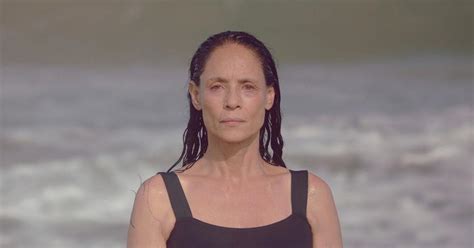
One of the most significant roles of her later career was in the 2016 film "Aquarius," which premiered at the Cannes Film Festival. Braga played a retired music critic living in an apartment complex who fiercely resists developers' offers to buy her out. The film garnered widespread critical acclaim, and while it did not secure an Oscar nomination for Braga, it was recognized at the Cesar Awards and the Independent Spirit Awards. IndieWire ranked her among the top five contenders for the Academy Award for Best Actress in their 2016 critics' poll. Her recent filmography includes roles in "Wonder" (2017), "Bacurau" (2019), "Fatima" (2020), and "The First Omen" (2024).
Personal Life and Legacy
Sonia Braga was born on June 8, 1950, making her a Gemini. Her height is 1.60 meters (5 feet 2 inches), and her weight is approximately 55 kilograms (121 lbs). She has black hair and dark brown eyes. Her sister Ana's daughter, Alice Braga, has also achieved success as an actress, continuing the family's artistic legacy. In August 2016, Braga revealed in an interview with Brazilian Elle that she chose not to have children, prioritizing her professional ambitions.
Sonia Braga's career is marked by her versatility, her ability to embody complex characters, and her significant contributions to both Brazilian and international cinema. She is recognized as the first Brazilian actress to receive BAFTA and Emmy nominations, underscoring her pioneering role in breaking barriers for Latin American talent on the global stage. Her enduring presence and the depth of her performances continue to inspire and entertain audiences worldwide.